What is Biochar?
Biochar is a carbon-rich solid created by pyrolysis of organic material in an oxygen-free environment. It's an ancient process dating back to Amazonian terra preta, now rediscovered as a sustainable solution for soil improvement and climate mitigation.
How is Biochar Made?
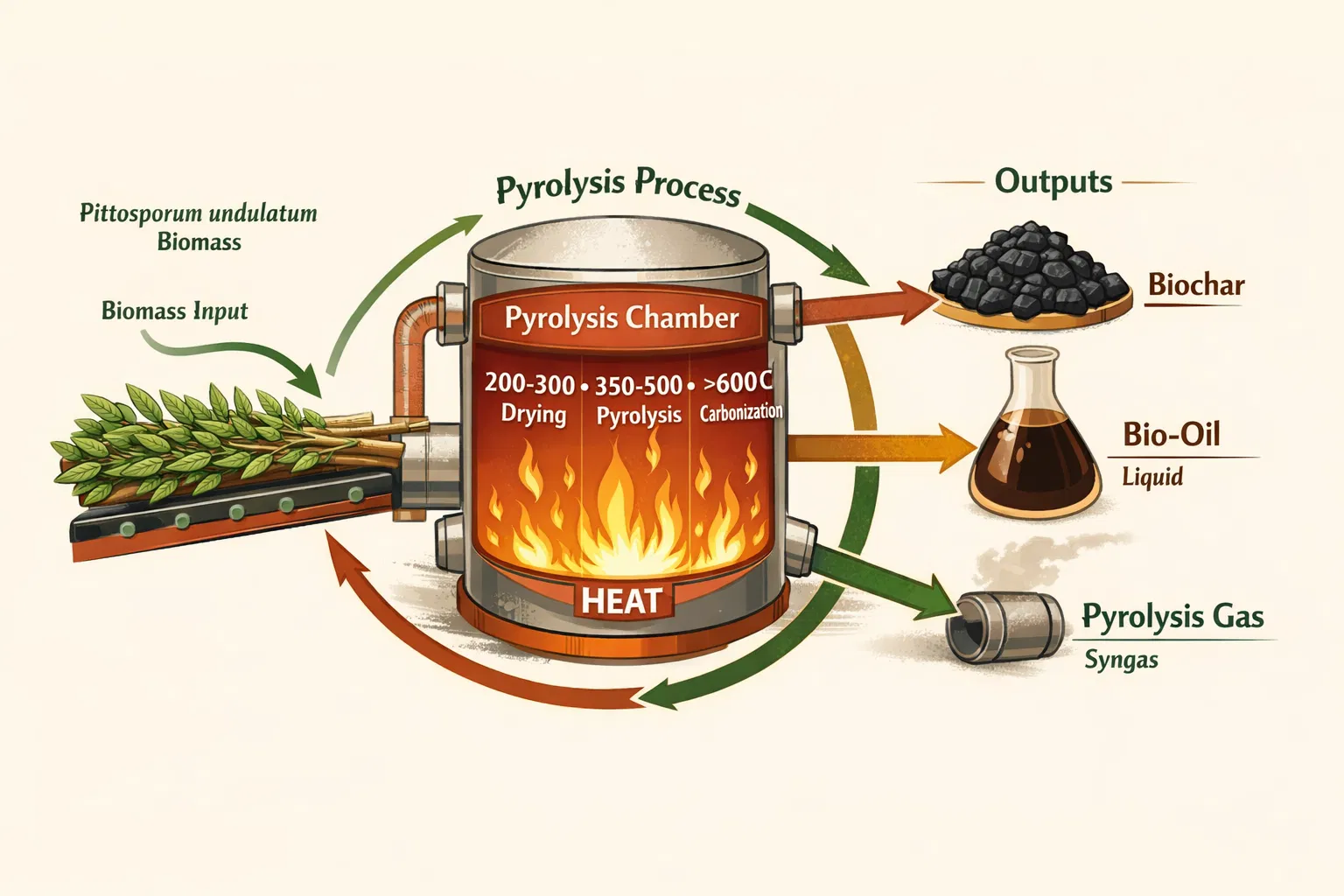
The pyrolysis process is a thermochemical degradation of biomass at high temperatures without oxygen.
Phase 1: Drying (200-300°C)
Moisture is removed from the biomass
Phase 2: Pyrolysis (350-500°C)
Organic substances are broken down into biochar, bio-oil and gases
Phase 3: Carbonization (>600°C)
Remaining substances are converted into pure carbon
Biochar Properties
Physical Properties
- •Porous structure: Increases water retention
- •High carbon content: 60-90% carbon
- •Low density: Easy to transport
- •Stability: Thousands of years in soil
Chemical Properties
- •High CEC: Cation Exchange Capacity
- •pH buffering: Neutralizes acidic soils
- •Nutrient retention: Retains nutrients
- •Microbial habitat: Promotes soil microbes
Biochar Applications
Agriculture
Improves soil quality, increases yields and reduces need for chemical fertilizers in grain farming.
Viticulture
Increases nutrient and water availability, leading to better grape quality.
Agroforestry
Supports sustainable mixed cropping systems with improved soil health.
Environmental Benefits
Carbon Sequestration
Biochar stores carbon that would otherwise enter the atmosphere. This carbon remains in soil for thousands of years.
Impact: Up to 50% of carbon in biomass is stored
Reduced Emissions
By processing Pittosporum through pyrolysis instead of open burning, we avoid direct CO₂ emissions and air pollution.
Impact: Eliminates open burning